


22 Oct New to Arizona? Here’s Why So Many Houses Look the Same
If you’ve recently moved to Arizona, or you’re thinking about relocating here, there’s something you might notice pretty quickly.
A lot of our houses look remarkably similar.
Stucco walls. Tile roofs. Block fences. Desert landscaping.
And approximately 47 different shades of beige.
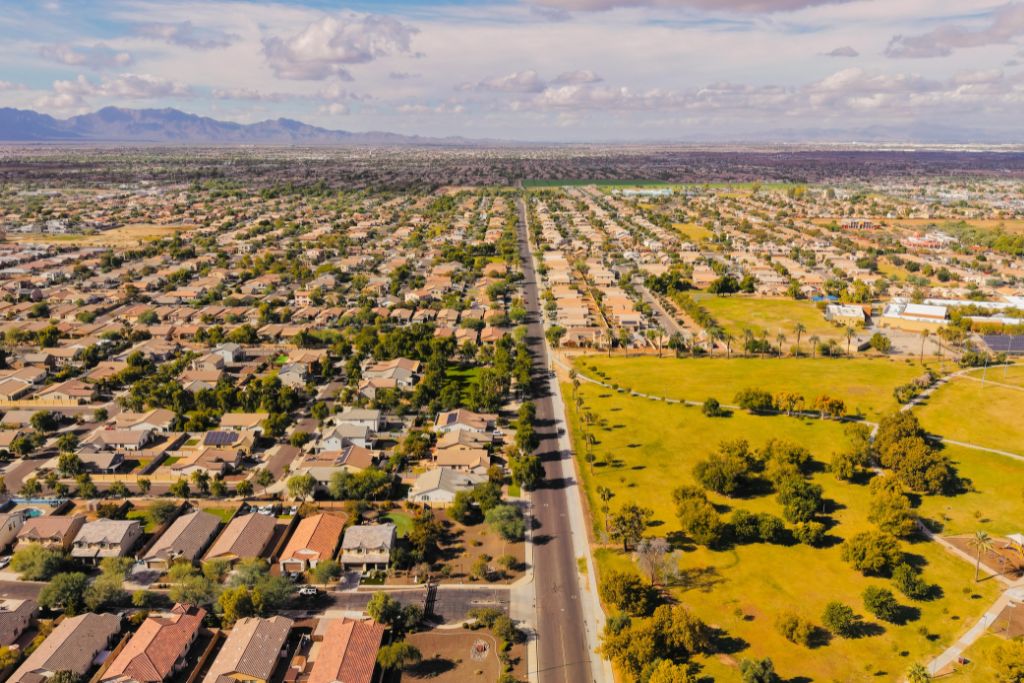
Drive through neighborhoods in Glendale, Peoria, Surprise, or just about anywhere in the Phoenix area, and you’ll see plenty of homes that fit that description.
If you’re coming from somewhere like New York, Pennsylvania, or the Midwest, where brick houses, siding, and steep roofs are common, Arizona homes can look pretty different.
But here’s what’s interesting.
There’s actually a reason Arizona houses look the way they do.
And no, it’s not simply because someone decided beige was going to be our official state color.
The appearance of Arizona homes comes from a combination of history, climate, building materials, and the way the Phoenix area developed over the years.
Some of these design choices go back centuries. Others are much more recent.
Let’s start with one of the most obvious.
Why Are So Many Arizona Houses Made of Stucco?
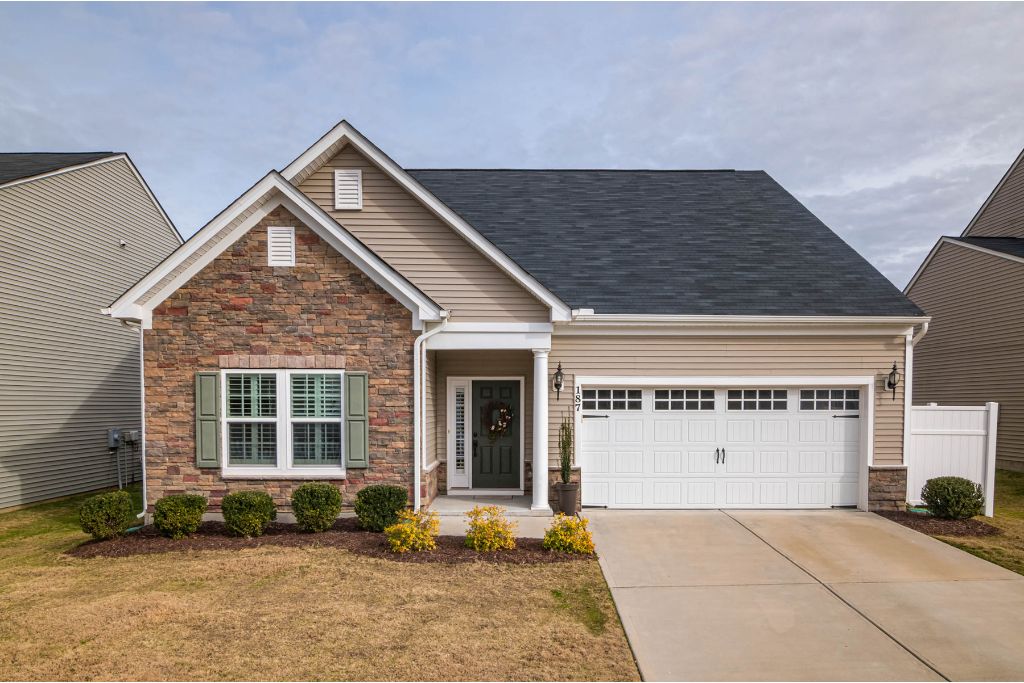
If you’ve ever wondered why stucco seems to be everywhere in Arizona, you’re certainly not alone.
Stucco is one of the most recognizable features of homes throughout the Phoenix area.
But it didn’t become popular simply because builders liked the appearance.
Part of the explanation goes back to the architectural traditions of the American Southwest.
Long before modern subdivisions existed, Indigenous communities throughout the Southwest built structures using earth and other locally available materials.
Adobe construction, which uses sun-dried earthen bricks, became an important building tradition in the region. Spanish and Mexican architectural influences later contributed to the development of the Southwestern styles we recognize today.
Those traditions helped inspire architectural styles featuring thick-looking walls, smooth exterior finishes, courtyards, and earth-toned colors.
Modern stucco homes aren’t necessarily built with adobe, though.
In fact, most contemporary stucco is simply an exterior finish applied over a framed or masonry structure.
It gives homes that familiar Southwestern appearance while offering a durable exterior when properly installed and maintained.
Stucco also works well with the simple shapes and architectural details commonly found in modern Arizona subdivisions.
And because builders have used it so extensively for decades, it’s become part of the visual identity of Phoenix-area neighborhoods.
A Little Arizona Architecture History
Here’s something interesting.
The Southwestern look we associate with Arizona isn’t one single architectural style.
It’s influenced by several traditions, including Pueblo, Spanish Colonial, Territorial, and later revival styles.
Pueblo Revival architecture, for example, became especially popular during the early 20th century.
These buildings often featured stucco exteriors, rounded corners, flat roofs, and design elements inspired by traditional Pueblo architecture.
You can still find examples of these styles in historic areas throughout Arizona.
So while the stucco house in a modern Peoria subdivision probably doesn’t look much like a centuries-old adobe building, there’s a historical connection between the two.
And that connection is part of what makes Arizona architecture distinctive.
Why Do Arizona Homes Have Tile Roofs?
Here’s another question people ask about Arizona houses.
Why are there so many tile roofs?
In other parts of the country, asphalt shingles are extremely common.
But drive through Arrowhead Ranch, Vistancia, or newer neighborhoods in Surprise, and you’ll see plenty of concrete and clay tile roofs.
Again, there’s more than one reason.
First, tile roofs fit naturally with the Spanish and Mediterranean architectural influences that became popular throughout the Southwest.
They also offer practical advantages.
Clay and concrete tiles are durable roofing materials that can perform well in hot, sunny climates when properly installed.
But there’s one misconception worth clearing up.
A tile roof isn’t automatically cooler just because it’s made of tile.
Roof color, reflectivity, ventilation, insulation, and the overall roofing system all affect how much heat enters a home.
According to the U.S. Department of Energy, roofing materials that reflect more sunlight can help reduce heat absorption, particularly in hot climates.
That means the performance of a roof depends on more than whether it’s made of tile or shingles.
Still, tile roofing has become such a familiar part of Arizona residential construction that many neighborhoods would look completely different without it.
And if you’re moving here from another state, it’s worth knowing that tile roofs have their own maintenance considerations.
The tiles themselves can last a long time, but the underlayment beneath them doesn’t necessarily last as long.
That’s something buyers should pay attention to when evaluating an older Arizona home.
Why Are Arizona Houses So Beige?
Now we’re getting to the important question.
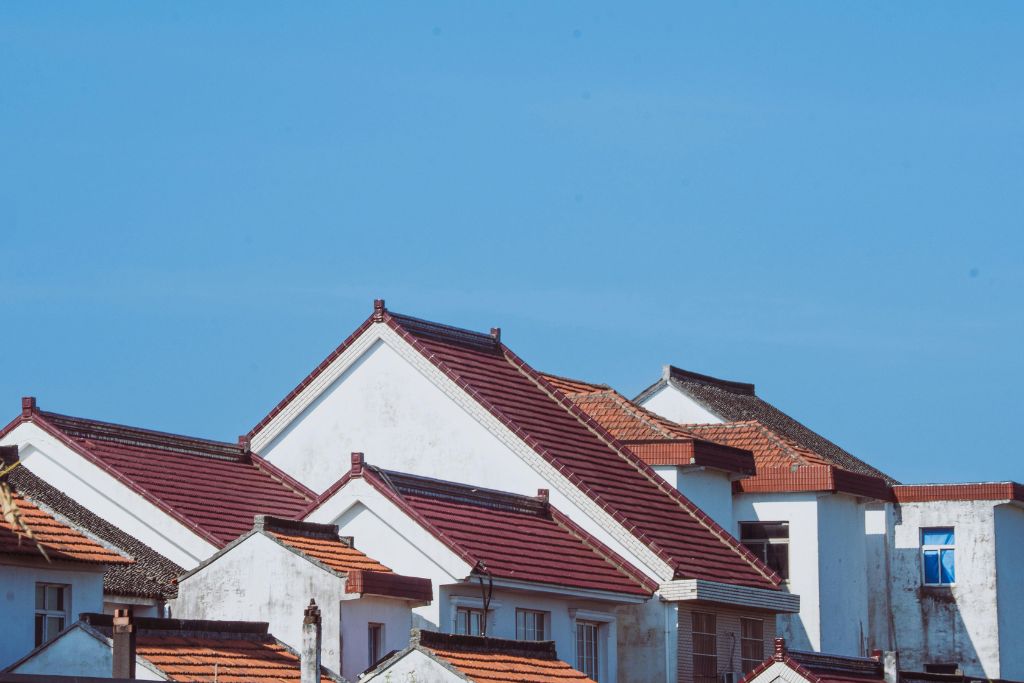
Why does Arizona seem to have an endless supply of beige, tan, sand, cream, and slightly different versions of brown?
Part of it comes from Southwestern architectural traditions.
Earth-toned colors have long been associated with the region’s adobe buildings and desert landscapes.
And when you think about it, those colors do fit naturally with the surrounding environment.
But there’s also a practical consideration.
Lighter-colored exterior surfaces generally absorb less solar energy than darker ones, although the actual performance depends on the material and finish.
In a place where summer temperatures regularly exceed 100 degrees, managing heat is a pretty reasonable priority.
Of course, that doesn’t mean every house needs to be beige.
Modern Arizona neighborhoods include plenty of white, gray, and other exterior colors.
But once a certain look becomes popular with builders and homeowners, it tends to stick around.
Especially when entire subdivisions are designed around coordinated exterior color palettes.
Fun Fact: Beige Isn’t Just an Arizona Thing
Desert-inspired colors appear in architecture throughout the American Southwest, including parts of New Mexico, California, and Texas.
The difference is that Phoenix experienced enormous residential growth during the era of large-scale subdivision development.
That helped spread similar colors, materials, and architectural styles across thousands of homes.
So the beige isn’t entirely about the desert.
It’s also about how our neighborhoods were built.
Why Do Arizona Homes Have So Many Block Walls?
If you’re new to Arizona, this one might surprise you.
Instead of wooden backyard fences, many Phoenix-area homes have concrete block walls separating properties.
They’re so common that it’s easy to forget they’re not the standard everywhere.
But there are practical reasons builders use them.
Concrete masonry walls are durable, don’t require the same type of maintenance as wooden fences, and aren’t vulnerable to termites in the way wood can be.
They also provide privacy between neighboring properties.
And because many Arizona subdivisions were developed with relatively close lot lines, block walls became a practical way to separate backyards.
There’s another factor too.
Once builders began using block walls extensively, they became part of the standard design of many residential developments.
That doesn’t mean every Arizona home has one.
But in Glendale, Peoria, Surprise, and much of the Phoenix metro area, they’re certainly a familiar sight.
One thing to know if you’re buying an Arizona home: Block walls can still develop cracks, movement, or drainage-related problems. They’re durable, but that doesn’t mean they’re maintenance-free.
Arizona’s Heat Has a Lot to Do With Home Design
There’s a reason home design in Phoenix looks different from home design in places like Michigan or New York.
We’re dealing with a very different climate.
In colder parts of the country, homes are often designed around retaining heat during long winters.
Here in Arizona, keeping unwanted heat out is a major consideration.
That’s why you’ll see features such as covered patios, shaded windows, roof overhangs, sunscreens, and carefully positioned outdoor living areas.
Window placement can make a noticeable difference, too.
For example, west-facing windows receive intense afternoon sunlight during Arizona summers.
Depending on the home’s design, shading those windows can help reduce unwanted solar heat gain.
This is also why two homes with similar square footage can feel very different during the summer.
The direction a house faces, the amount of shade it receives, and the quality of its windows and insulation can all affect comfort.
And if you’re moving to Arizona, these are things worth paying attention to beyond the home’s appearance.
Something Arizona Buyers Don’t Always Think About
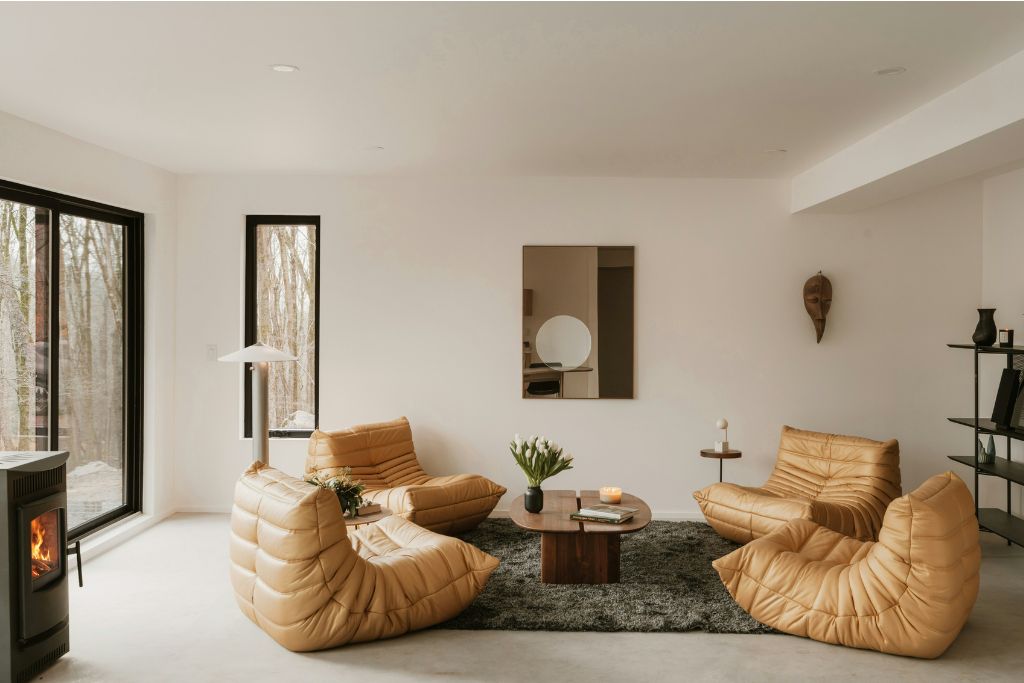
A beautiful wall of west-facing windows might look wonderful during a showing.
But it’s worth thinking about what that room will feel like at 4 p.m. in July.
That’s not a reason to avoid a particular house.
It’s simply a reminder that the way a home handles Arizona’s climate matters just as much as how it looks.
Why Is Desert Landscaping So Common in Arizona Neighborhoods?
Here’s another big difference between Arizona and much of the country.
Lawns aren’t necessarily the default.
Instead, you’ll see gravel, decorative rock, desert plants, cacti, and drought-tolerant trees throughout Phoenix-area neighborhoods.
Part of that is simply because we’re living in the Sonoran Desert.
Maintaining large areas of traditional grass can require substantial irrigation, especially during our hottest months.
Desert-adapted landscaping can reduce outdoor water use when plants are selected and maintained appropriately.
But there’s also a visual element.
Rock landscaping and desert plants fit naturally with the Southwestern architectural styles that have become popular here.
And in many newer communities, the landscaping is designed to create a consistent appearance throughout the neighborhood.
Of course, not every Arizona yard is covered in gravel.
You’ll still find grass lawns, mature shade trees, gardens, and lush landscaping throughout established neighborhoods.
That’s actually one of the interesting differences between some older Glendale and Peoria communities and newer developments farther north and west.
For example, Arrowhead Ranch in Glendale is known for its mature landscaping, lakes, and greenbelts, creating a noticeably different environment from many newer desert-oriented communities.
The landscaping can give neighborhoods very different personalities.
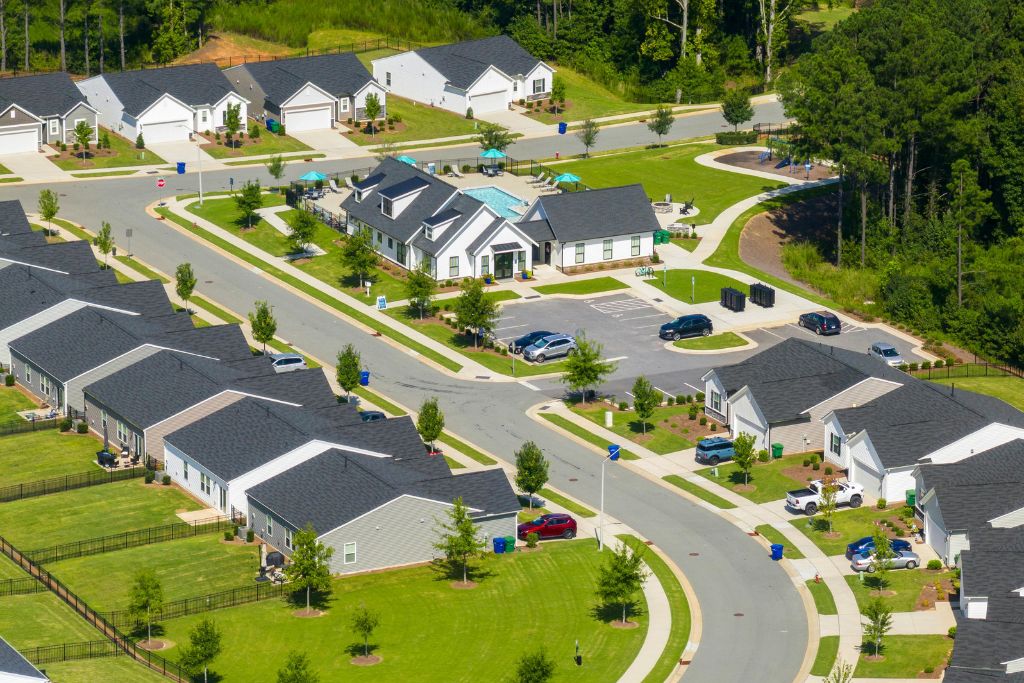
Why Do So Many Arizona Neighborhoods Look Alike?
Now we’ve covered stucco, tile roofs, block walls, and desert landscaping.
But there’s another reason so many Arizona houses have a similar appearance.
The way the Phoenix area grew.
Phoenix experienced substantial population growth during the second half of the 20th century, and residential development expanded outward into surrounding communities.
As Glendale, Peoria, Surprise, and other cities grew, large homebuilders developed entire subdivisions at a time.
Instead of building every house individually with a completely different design, builders typically offered a selection of floor plans and exterior elevations.
That allowed them to build homes more efficiently and create neighborhoods with a coordinated appearance.
It’s why you might drive through a community and notice the same basic house design repeated several times with slightly different colors, rooflines, or garage configurations.
And this isn’t unique to Arizona.
Large subdivisions exist all over the country.
But because so much of the Phoenix area’s residential growth happened during periods when Southwestern-inspired architecture was popular, those designs became especially widespread.
Here’s Where It Gets Interesting
Not every Northwest Valley neighborhood looks the same.
Drive through an established area of Glendale, and you might see mature trees, older ranch-style homes, and architectural features that reflect a different era of construction.
Head toward newer communities in North Peoria or Surprise, and you’ll often find more contemporary floor plans, updated exterior designs, and different approaches to landscaping.
Even within the same city, the age of a neighborhood can tell you quite a bit about the homes you’re likely to find.
That’s one of the reasons I think it’s helpful to explore several communities when you’re relocating to Arizona.
If you’re considering the Northwest Valley, my article about neighborhoods in Glendale and Peoria is another place to start comparing some of the area’s established and newer communities.
The differences aren’t always obvious from listing photos.
Are Arizona Homes Built Differently From Houses in Other States?
Yes, although not every difference is visible from the street.
Homes throughout the country must account for local climate conditions, building codes, and construction practices.
In Arizona, that means paying particular attention to summer heat, sun exposure, cooling systems, and water use.
In colder climates, builders may place greater emphasis on things like snow loads, freezing temperatures, and heating requirements.
But it’s important not to assume that every Arizona house is built the same way.
Construction methods have changed considerably over the decades.
An older home in Glendale may have very different insulation, windows, roofing materials, and mechanical systems than a newly constructed home in North Peoria.
And while stucco and tile roofs are common, you’ll also find homes with brick, siding, metal roofs, flat roofs, and plenty of other architectural features.
Arizona has more variety than people sometimes realize.
You just have to know where to look.
What Should You Pay Attention to When Moving to Arizona?
If you’re relocating to the Phoenix area, understanding why Arizona homes look different is interesting.
But understanding how those differences affect everyday living is even more useful.
When you’re comparing homes, I think it’s worth looking beyond the exterior style.
Pay attention to the roof’s age and condition, the home’s orientation, window placement, insulation, and cooling system.
Look at how much afternoon sun reaches the backyard.
Think about whether the covered patio will provide shade when you actually want to use it.
And don’t overlook the landscaping.
A yard filled with mature trees can feel very different from one with newer desert plants that haven’t had time to grow.
These details don’t necessarily make one home better than another.
They simply help you understand what living in that particular house might be like.
And that’s especially helpful when you’re moving here from somewhere with a completely different climate.
If you’re exploring homes and neighborhoods in Peoria, Arizona, for example, you’ll find a wide range of communities, from established residential neighborhoods to newer developments farther north.
So, Why Do Arizona Houses Look the Same?
The short answer?
It’s a combination of history, climate, and decades of residential development.
Stucco and earth-toned colors reflect longstanding Southwestern architectural influences.
Tile roofs became popular partly because of regional design traditions and their practical characteristics.
Block walls offer privacy and durability.
Desert landscaping reflects our environment and the need to be thoughtful about water use.
And large-scale residential development helped make many of those features standard throughout the Phoenix area.
Once you understand the reasons behind them, Arizona houses start to look a little different.
Or at least a little more interesting.
The 47 shades of beige, however, I still can’t fully explain.
If you’re thinking about moving to Glendale, Peoria, Surprise, or anywhere around the Northwest Valley, I’m always happy to help you explore the differences between communities and find a home that fits the way you want to live.
Because even when the houses look similar from the street, living in them can be a very different experience.