


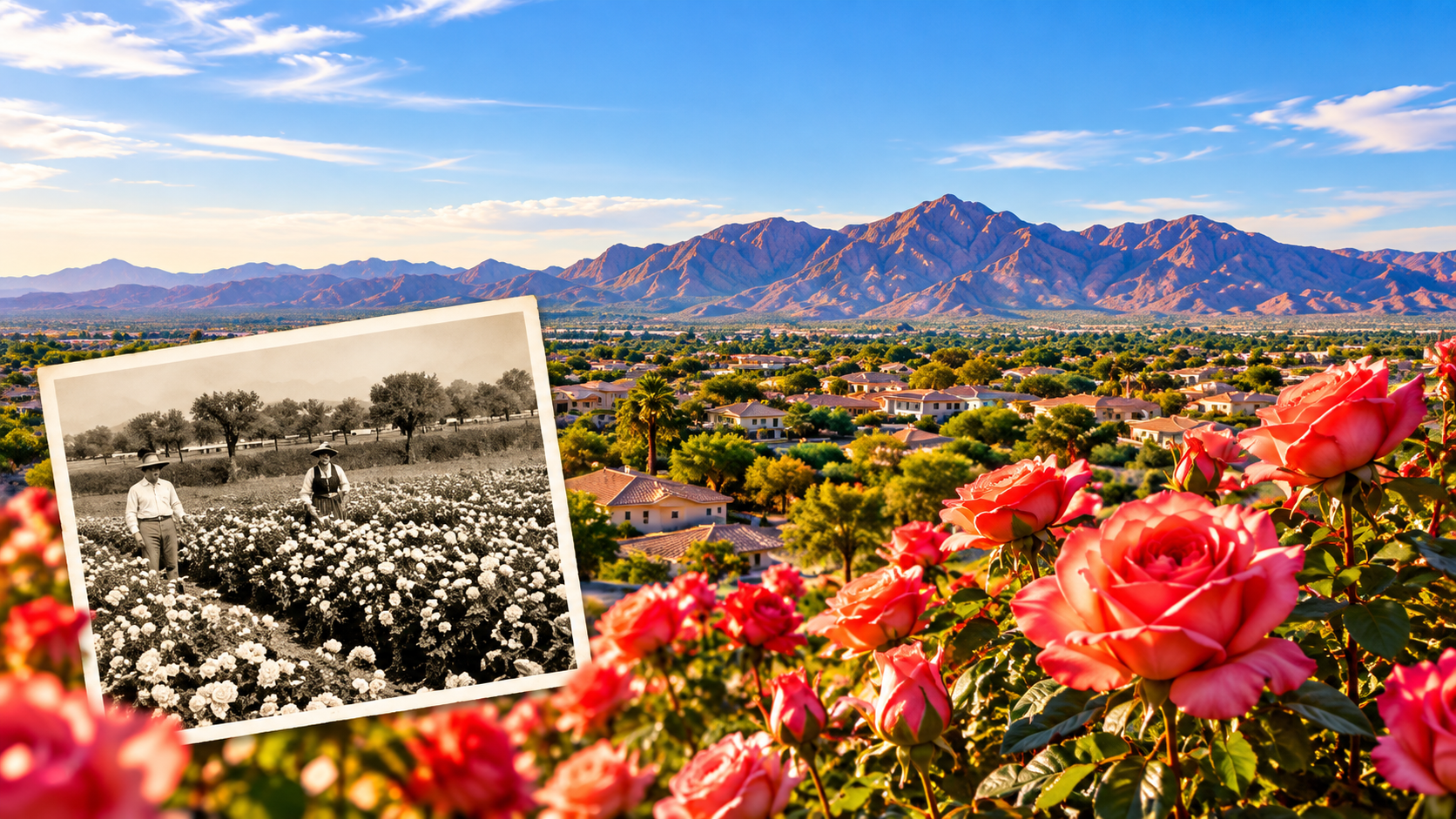
01 Oct Peoria, Arizona Was Once the Rose Capital of the World
If you know Peoria today, you probably think of growing neighborhoods, Lake Pleasant, the Peoria Sports Complex, new development in North Peoria, and plenty of restaurants and shopping.
Roses probably aren’t the first thing that comes to mind.
So here’s a piece of Peoria history that surprised me: Peoria was once named the “Rose Capital of the World.”
The City of Peoria dates that distinction to 1956, just two years after Peoria officially incorporated as a city.
Considering how different Peoria looks today, I wanted to know a little more about how we got from a small agricultural community to the city we know now.
Peoria Started as a Farming Community
To understand the rose story, you have to go much further back than the 1950s.
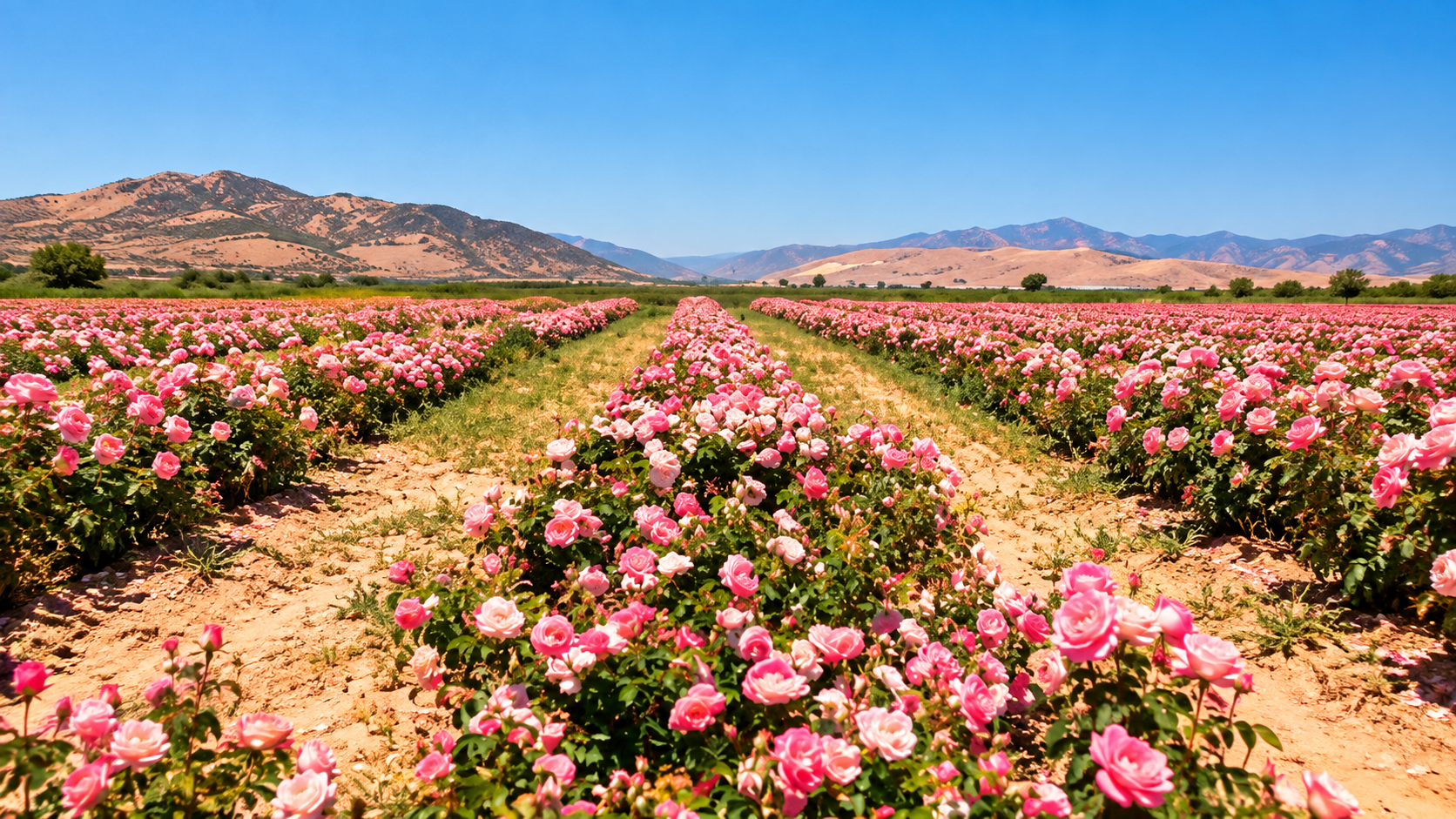
Peoria’s modern history begins in the 1880s, after completion of the Arizona Canal brought irrigation water to this part of the Salt River Valley. William John Murphy helped recruit settlers to the area, including families from Peoria, Illinois.
Four families from Illinois arrived in 1886 and established themselves here. They eventually gave their new community a familiar name: Peoria.
It’s interesting to picture what this area must have looked like then.
The Peoria we know today stretches far north toward Lake Pleasant and includes neighborhoods, shopping centers, parks, schools and major roadways. Back then, this was primarily an agricultural community where access to irrigation made farming possible in the desert.
Peoria grew gradually around that agricultural foundation before officially incorporating in 1954.
When Did Peoria Become the Rose Capital of the World?
This is where things get interesting.
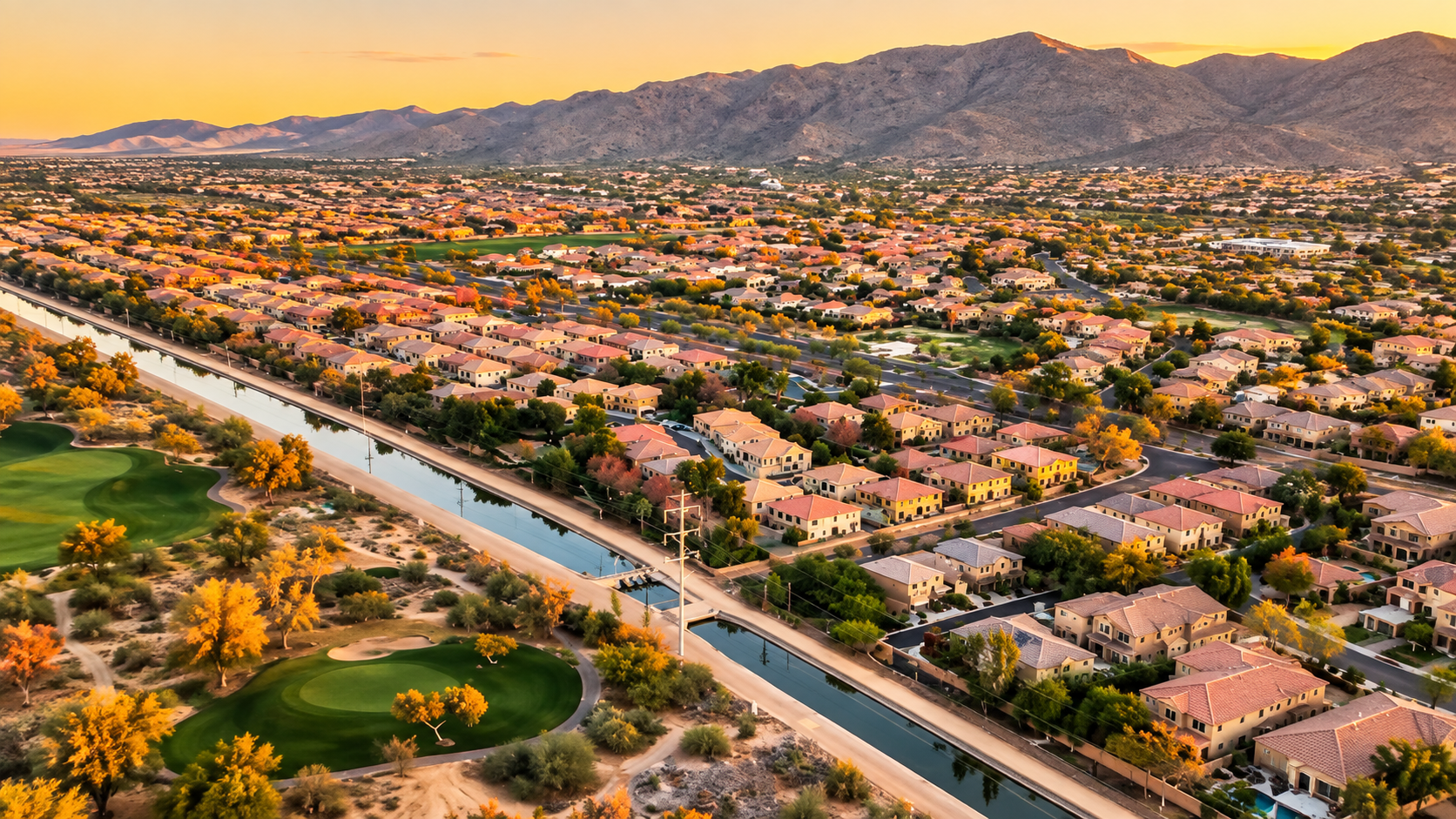
Visit Peoria’s official history and facts information says the city was named the “Rose Capital of the World” in 1956. The Peoria Chamber of Commerce also lists the designation as part of the city’s history.
And I have to admit, that’s not a title I would have guessed based on Peoria today.
When you’re driving through North Peoria now, you’re probably noticing mountain views, desert landscaping, new communities and all the development happening around the area.
You’re probably not thinking:
Ah yes, the Rose Capital of the World.
But that’s one of the things I enjoy about digging into local history. Places change so much that sometimes their past feels almost completely disconnected from what we see today.
So What Happened to All the Roses?
That’s the question I immediately had too.
And this is where I don’t want to make up a neat story simply because it would make the blog more interesting.
The official Peoria sources I found confirm the Rose Capital of the World designation, but they don’t provide much detail about exactly why Peoria received the title or identify one specific event that brought the rose era to an end.
What we can clearly see is how dramatically Peoria itself changed.
The community that began with a handful of farming families eventually grew far beyond its agricultural roots. Today, Peoria covers more than 180 square miles and has a population of more than 200,000, according to current city tourism data.
That’s quite a transformation from a community whose U.S. Post Office served a population of just 27 in the late 1880s.
There Are Still Little Pieces of Old Peoria Around
One reason I think local history like this is fun is that some of it is still sitting right in front of us.
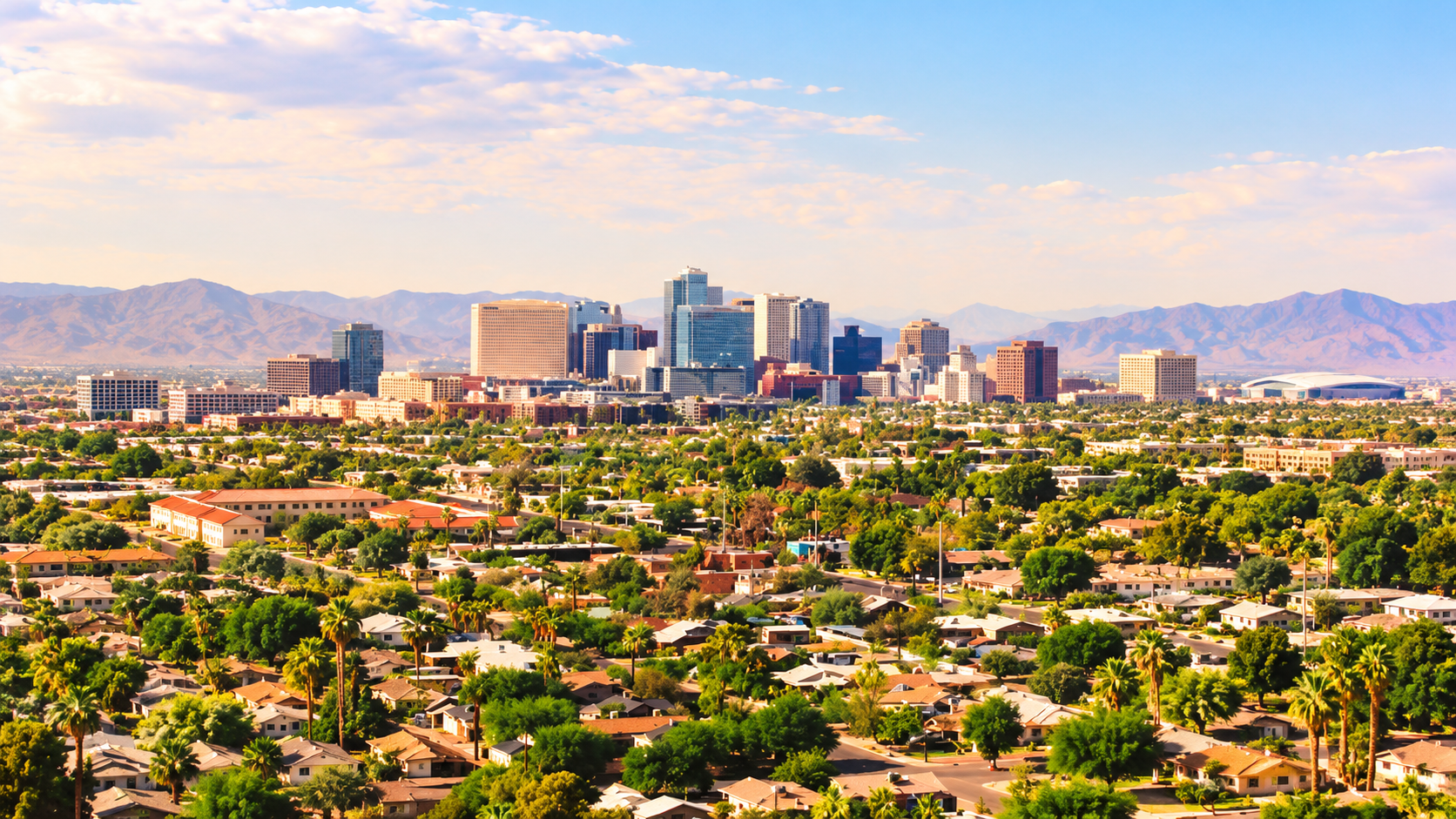
Old Town Peoria includes historic places such as Central School, built in 1906 and now home to the Peoria Arizona Historical Society Museum. There’s also the old Peoria Jail House, which was built as a Works Progress Administration project in 1939 and originally served as both the town hall and jail.
Those places can be easy to overlook when so much of the conversation around Peoria today is about what’s new.
And there is certainly plenty that’s new, especially as you head farther north.
But Peoria has a story that started long before Vistancia, the Loop 303 or the Peoria Sports Complex.
It started as a small agricultural settlement in the desert.
And somehow along the way, it became the Rose Capital of the World.
I’ve lived in the Northwest Valley for a long time, and I still come across pieces of local history like this that surprise me.
Although I haven’t found a satisfying answer to the most important question yet:
What happened to all the roses? 🌹