


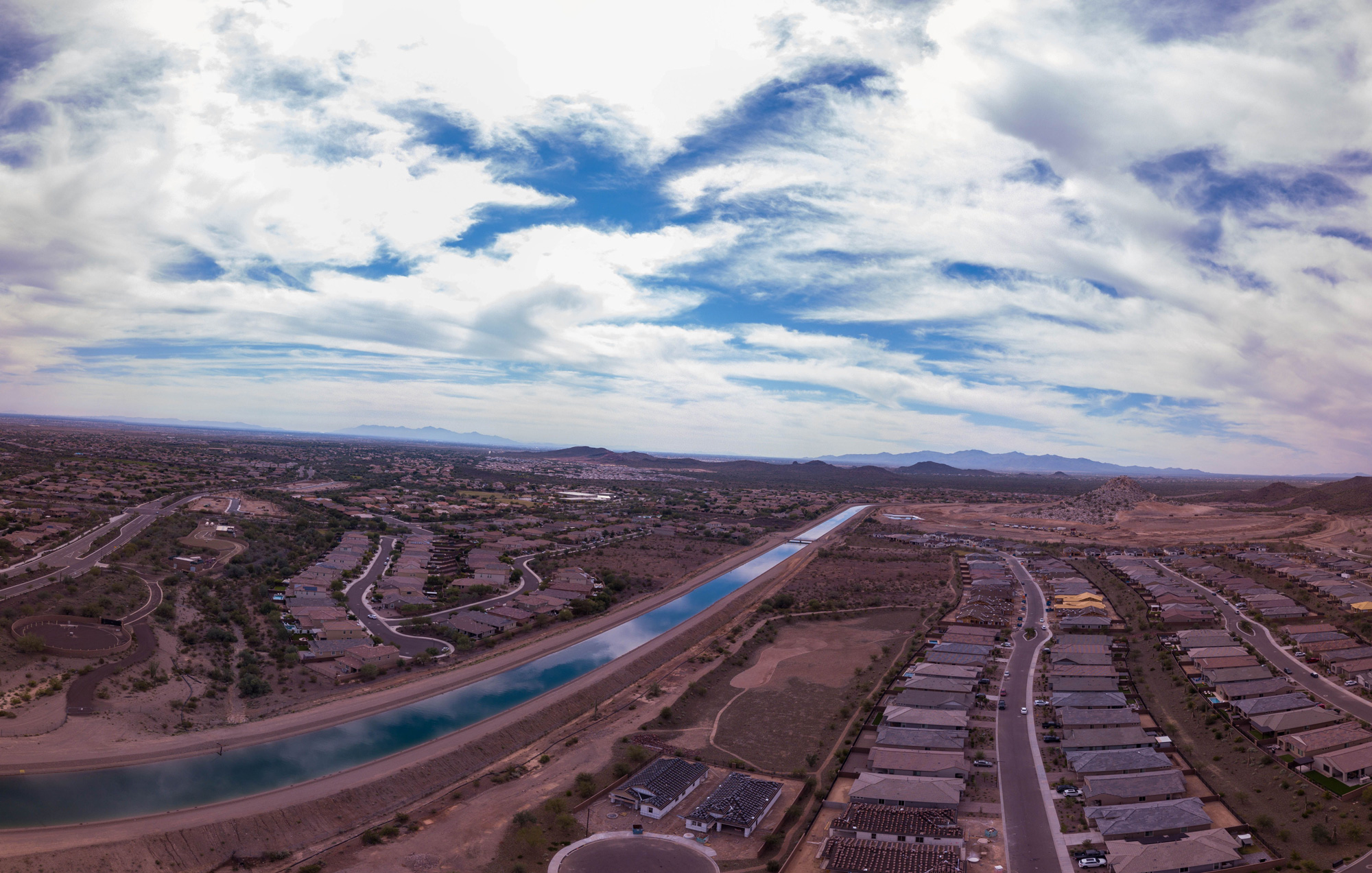
01 Nov Is Arizona Really Running Out of Water?
If you’ve lived in Arizona for any length of time, you’ve probably heard someone ask this question:
Is Arizona really running out of water?
And if you’re thinking about moving here, there’s a good chance you’ve wondered about it yourself.
Between headlines about the Colorado River, Lake Mead, drought conditions, and possible water shortages, I can understand why people are concerned.
After all, we live in the desert. Water is a pretty important part of the conversation.
But here’s what I think gets lost in some of those headlines.
The answer isn’t as simple as saying Arizona is running out of water. And it isn’t as simple as saying there’s nothing to worry about, either.
The reality is somewhere in between.
I wanted to take a closer look at what’s happening, where Phoenix actually gets its water, and what all of this means for people who live here or are considering making Arizona their home.
What’s Actually Happening With Arizona’s Water Supply?
Let’s start with the Colorado River.
The Colorado River supplies water to millions of people across the Southwest, including parts of Arizona.
Unfortunately, the river has been under tremendous pressure for years.
Long-term drought, rising temperatures, reduced runoff, and growing demands on the river have all contributed to declining water supplies.
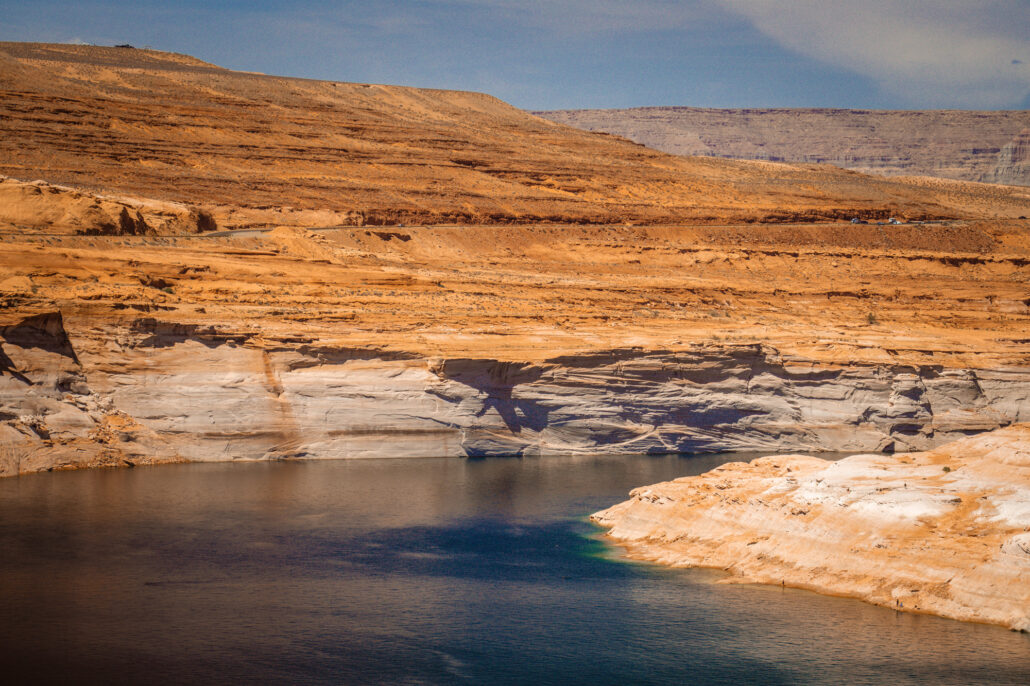
Lake Mead and Lake Powell, two major reservoirs in the Colorado River system, have experienced historically low water levels in recent years.
And with new federal operating guidelines being developed for 2027 and beyond, Arizona faces the possibility of additional reductions in its Colorado River water supply.
That’s a serious issue.
But here’s something that doesn’t always make it into the headlines.
Not every Arizona city depends on the Colorado River in the same way.
Different communities have different water sources, infrastructure, and long-term plans.
And that makes a big difference when we’re talking about what a water shortage could actually mean for homeowners.
Where Does Phoenix Get Its Water?
One thing that might surprise people is that Phoenix doesn’t get all its water from the Colorado River.
According to the City of Phoenix, its drinking-water supply comes primarily from three sources:
- Colorado River: Approximately 40%, delivered through the Central Arizona Project.
- Salt and Verde rivers: Approximately 58%.
- Groundwater: A small remaining portion.
Those percentages can change depending on conditions and how the city’s water system is being managed.
But the important point is that Phoenix has more than one source of water.
So when you hear that Arizona could receive less Colorado River water, that doesn’t automatically mean Phoenix residents will suddenly turn on their faucets and find nothing coming out.
The city has other water sources, stored reserves, and infrastructure designed to help manage shortages.
That doesn’t eliminate the problem, but it does provide more options.
Phoenix Has Been Preparing for Water Shortages for Decades
Here’s something I found particularly interesting while looking into this topic.
Phoenix hasn’t just started thinking about water shortages because of the latest headlines.
The city has been preparing for changing water conditions for decades.
That includes storing water underground, developing groundwater recovery systems, encouraging conservation, and investing in infrastructure.
One example is the city’s Drought Pipeline project.
What Is the Phoenix Drought Pipeline?
The Drought Pipeline was designed to help move water from the Salt and Verde river system into parts of North Phoenix that have historically relied more heavily on Colorado River water.
Think of it this way.
If one water source becomes less reliable, the city needs a way to move available water from another part of its system.
That’s what this project helps accomplish.
It may not be the most exciting thing happening around Phoenix, but when you live in the desert, having a flexible water system is a pretty big deal.
Phoenix is also exploring additional long-term water supplies, including advanced water purification through its Pure Water Phoenix program.
These projects are part of the city’s efforts to prepare for a future when traditional water supplies may become less predictable.
Will Phoenix Residents Face Water Restrictions?
This is probably one of the biggest questions homeowners have.
If Arizona receives less Colorado River water, does that mean residents will have to stop watering their yards, filling their pools, or using water normally?
Not necessarily.
Water restrictions depend on local conditions, available supplies, and decisions made by individual water providers.
Phoenix has a drought management plan with different stages that guide the city’s response to water shortages.
At the time of the city’s previously published updates, Phoenix remained in Stage 1, which emphasizes conservation and public education rather than immediate mandatory restrictions.
That doesn’t mean restrictions could never happen.
It means the city has a process for responding to changing conditions instead of treating every shortage announcement as an immediate emergency.
And I think that’s an important distinction.
What About Glendale, Peoria, and the Northwest Valley?
This is where the conversation becomes especially relevant for people living in the Northwest Valley.
When someone says Arizona is facing water shortages, it’s easy to assume every community is dealing with exactly the same situation.
But that’s not necessarily true.
Glendale, Peoria, Surprise, and other communities throughout the Phoenix metro area have their own water providers, supply arrangements, and conservation programs.
Some communities rely on combinations of surface water and groundwater. Others may have different supply agreements or infrastructure.
Even within the Northwest Valley, it’s worth looking at the specific city and water provider rather than assuming the entire region operates under one system.
And if you’re considering buying a home in a newer community, particularly in an area where development is continuing, water availability is a reasonable thing to ask about.
What Should Homebuyers Ask About Water?
If you’re relocating to Arizona or considering buying a home in Glendale, Peoria, or Surprise, here are a few questions worth asking:
- Who provides water service to the property?
- What are the provider’s primary water sources?
- Are there any current water restrictions?
- Does the property have an HOA with landscaping or irrigation requirements?
- If it’s a new development, what water-supply approvals apply to the project?
Arizona also has groundwater regulations and an Assured Water Supply Program that applies to certain developments in designated areas.
The details can get complicated, especially when comparing established neighborhoods with newer communities.
But you don’t need to become an expert in Arizona water law to ask good questions before buying a home.
You just need to know where to look for reliable information.
Why Does Arizona Put So Much Emphasis on Desert Landscaping?
If you’ve spent time driving around Phoenix, you’ve probably noticed something about our yards.
We have a lot of gravel.
And cactus.
And palo verde trees.
And considerably less grass than you might find in other parts of the country.
There’s a practical reason for that.
Outdoor water use can account for a significant portion of household water consumption, particularly in homes with large lawns or extensive irrigation.
The City of Phoenix has reported that outdoor water use can account for as much as 70% of residential water consumption.
That’s one reason desert-friendly landscaping has become such a common feature of Arizona neighborhoods.
Plants that are adapted to our climate generally require less supplemental watering once established.
And with the right design, desert landscaping can still be attractive, colorful, and full of interesting plants.
It doesn’t have to mean a yard with nothing but rocks and one lonely cactus.
For homeowners, even relatively simple changes can help reduce water use.
Checking irrigation systems for leaks, adjusting watering schedules seasonally, and choosing plants suited to our climate can all make a difference.
And considering how much time we spend trying to keep our outdoor spaces comfortable in Arizona, it makes sense to think about how much water those spaces require.
Is Arizona’s Water Situation Going to Affect Home Values?
This is another question that comes up when people talk about Arizona’s long-term future.
Could water shortages eventually affect real estate?
It’s certainly something worth paying attention to.
Reliable water supplies are an important part of community planning, development, and long-term growth.
Water availability can influence where new housing is approved, how communities expand, and what infrastructure may be needed.
But I would be careful about assuming that every headline about the Colorado River translates directly into falling home values.
Real estate markets are influenced by many factors, including supply, demand, employment, affordability, interest rates, and neighborhood conditions.
And just as every Arizona city has a different water situation, every real estate market is different, too.
A home in an established Glendale neighborhood isn’t necessarily facing the same development or water-supply questions as a proposed subdivision on the outskirts of the Valley.
That’s why I think it’s more useful to look at the specific property and community rather than make sweeping assumptions about Arizona real estate.
So, Is Arizona Really Running Out of Water?
I wouldn’t describe it quite that way.
Arizona is facing a very real water challenge.
The Colorado River is under significant stress, and communities throughout the Southwest are having to think carefully about how they manage their water supplies.
Those concerns deserve to be taken seriously.
But that doesn’t mean every city in Arizona is about to run out of drinking water.
Phoenix has multiple water sources, stored reserves, conservation programs, and infrastructure designed to help the city manage shortages.
Other communities have their own plans and challenges.
And there is still a lot of work to be done.
What I find most interesting is that the bigger story isn’t just about how much water Arizona might lose.
It’s also about what our communities have been doing to prepare.
Living in the desert means water will always be something we need to think about.
And I think that’s perfectly reasonable.
We should understand where our water comes from, pay attention to what’s changing, and make thoughtful decisions about how we use it.
But we should also understand the difference between a serious long-term challenge and an immediate crisis.
Because those aren’t necessarily the same thing.
Thinking About Moving to Arizona?
If you’re considering moving to Glendale, Peoria, Surprise, or anywhere in the Northwest Valley, water is just one of the many things worth understanding about living here.
Every community has its own character, amenities, development plans, and practical considerations.
I’ve lived in the Northwest Valley for decades, and I know how important it is to look beyond the house itself when deciding where to live.
If you have questions about neighborhoods or are trying to compare different areas, I’m always happy to share what I know and help you find the information you need.
Sometimes the best place to start is simply asking the right questions.